



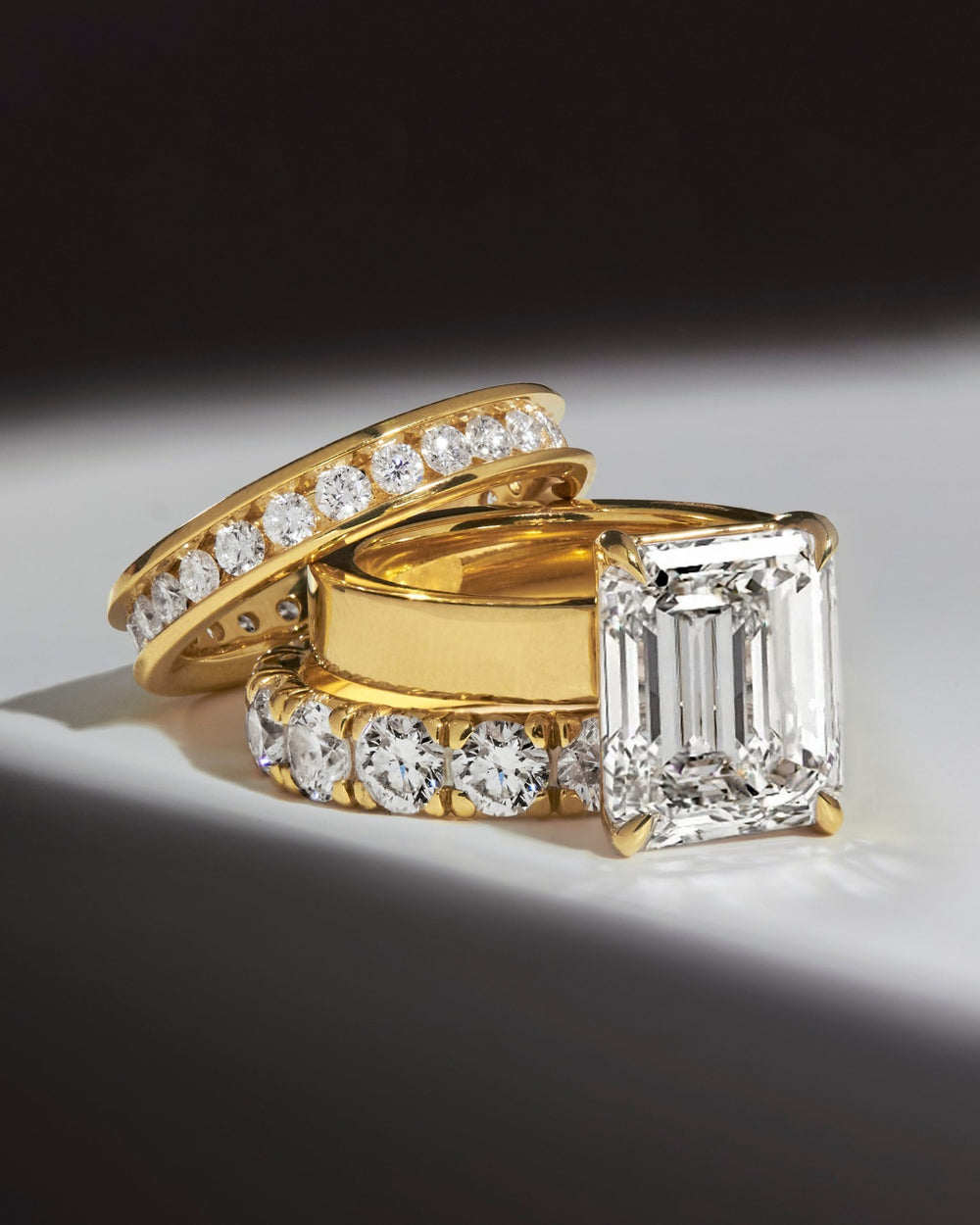
Understanding the 4Cs of Lab-Grown Diamonds: The Ultimate Buyer's Guide
When you buy a diamond for yourself, it feels amazing, doesn’t it? The sheer beauty of it and the little feeling of accomplishment that accompanies the purchase. The entire experience is one you remember for a long time.
However, with today’s diverse market of gemstones and precious stones, deciding which diamond to buy can be tricky. You would want to take home lab-grown diamonds that are as pure as they come.
Hence, it is important for you to understand and be aware of the 4Cs of lab-grown diamonds. What are these? How do they affect the quality of your purchase? We’ll dissect it all in this blog.
What are the 4Cs of Lab-Grown Diamonds?
Basically, what we are referring to as the ‘4Cs’ are nothing but four of the most important characteristics of every quality diamond (either lab-grown or otherwise).
These are as follows:
- Cut
- Colour
- Clarity
- Carat Weight
In fact, even the International Gemological Institute (IGI) uses the same ‘4Cs’ to determine the quality of any diamond.
Why do the 4Cs matter when buying a lab-grown diamond?
Whenever you go to buy something, having a thorough understanding of that product is important if you want your money’s worth.
So, when you are going to buy a lab-grown diamond, it is essential to understand its key characteristics. After all, you wouldn’t want to spend your hard-earned money on something that is not of the quality you are expecting.
So, without further delay, let’s talk about the 4Cs in brief.
Cut: The Key to a Diamond’s Sparkle
In simple words, ‘cut’ refers to the precision with which the diamond has been cut. When it is cut well, you will notice that the diamond exudes sparkle, fire, and sheer brilliance.
The cut is usually divided into 5 different grades. These are:
- Excellent
- Very Good
- Good
- Fair
- Poor
Buying Tip: When buying, always pick a diamond with an ‘excellent’ or ‘very good’ cut. If you do that, you will get a diamond that is beautiful and long-lasting.
Colour: Understanding Diamond Colour Grades
Notably, the colour grade of a diamond ranges between D and Z. While ‘D’ refers to a completely colourless diamond, ‘Z’ is for diamonds with a brown or yellow tint.
We can divide this colour scle into the following:
- D–F: Colorless
- G–J: Near Colorless
- K–Z: Noticeable Color
Buying Tip: When making your purchase, remember that colour grades between F and H provide a nice balance between value and beauty.
Clarity: What it means and Why it matters?
Now this one’s a slightly trickier of the 4Cs to understand. The ‘clarity’ of a diamond is the presence of the inclusions (imperfections on the interior) and blemishes (external surface marks).
It must be understood that diamonds form under immensely intense conditions. So, even lab-grown ones will have the ‘inclusions’ we talked about.
For clarity, we categorize diamonds into the following types:
- FL (Flawless)
- IF (Internally Flawless)
- VVS (Very Very Slightly Included)
- VS (Very Slightly Included)
- SI (Slightly Included)
- I (Included)
Buying Tip: When making the purchase, remember that VS1 and VS2 categories are often considered to be the best choices.
Carat Weight: Size vs Appearance
Notably, carat is the standard for measuring a diamond’s weight and not its size. In other words, you may find that two diamonds with the same carat weight will have differing size and proportion.
Also, several factors determine a diamond’s size. They are as follows:
- Diamond cut
- Shape
- Setting style
- Finger size
Buying Tip: Well, a great tip in this regard is picking a diamond with a carat weight just below popular ones (For example, buying a 0.90 instead of a 1.00 carat diamond).
Which of the 4Cs Should You Prioritize?
Although every other buyer has a different preference, a clear and practical order of priority is the following:
- Cut
- Carat Weight (based on your preference)
- Color
- Clarity
If you're comparing different styles, exploring a range of lab-grown diamond rings can help you see how each of the 4Cs influences a diamond's overall appearance.
Important Tip: Always remember that an exceptionally cut diamond will appear more majestic and more beautiful than the largest ones with poor proportions.
Common Mistakes to Avoid While Choosing a Lab-Grown Diamond
Out to by your next lab-grown diamond? Remember to avoid these common mistakes to ensure a successful purchase:
- Do not aim for a larger carat and overlook the cut quality
- Whatever you do, never ignore the diamond certification
- Avoid being too stuck on the price and ignoring the quality
- Never pay extra for clarity differences that aren’t clearly visible on the diamond
Here’s a Quick Checklist When You Want to Buy the Right for Lab-Grown Diamond
We hope that you feel a lot more aware and confident after going through our blog. We want to reiterate that the key to making a good purchase is ensuring that you are fully aware about the important characteristics of a lab-grown diamond.
And we dedicated this entire blog to help you understand that. So, bookmark this blog for the next time you stroll through the market looking for your next charming diamond! Want to find some quality diamonds that will suit your style? Explore several options at Doozy Diamonds.
FAQs
1: Which of the 4Cs is the most important?
‘Cut’ is known to be the most important among the 4Cs as it has the greatest impact on the brilliance and sparkle of the diamond.
2: Are the 4Cs of lab-grown diamonds the same as natural diamonds?
Yes. Both natural and lab-grown diamonds are graded using the same internationally recognized standards for cut, color, clarity, and carat weight.
Share this
Popular posts

Popular posts

Popular posts
